A Solitary Confinement
A true story about Guillain-Barre Syndrome by
Robin Sheppard
A true story about Guillain-Barre Syndrome by
Robin Sheppard
April, 2026
Guillain-Barré early symptoms often begin with tingling, weakness, or numbness in the legs that gradually spreads upward. Recognising these early warning signs can help you seek medical care before symptoms worsen.
Guillain-Barré Syndrome (GBS) is rare, but its early signs can escalate quickly. Understanding what to look for can make a critical difference in early diagnosis and recovery outcomes.
Key Takeaways
Guillain-Barré’s early symptoms usually start subtly. Many people mistake them for fatigue, minor nerve issues, or even stress-related sensations.
At the beginning, the body sends small signals before more serious symptoms develop. These signals are your first clue that something may not be right.
These symptoms may seem harmless at first. However, what makes GBS unique is how quickly these symptoms can progress.
Check this guide to learn about the 4 Types of Guillain-Barré Syndrome.
GBS is a condition where the immune system mistakenly attacks the peripheral nerves. This leads to nerve inflammation and damage, which affects muscle control and sensation.
| Stage | What Happens | Timeframe |
|---|---|---|
| Early Stage | Tingling and weakness begin | Days to 1 week |
| Progressive Stage | Weakness spreads upward | 1–3 weeks |
| Peak Stage | Severe weakness or paralysis | 2–4 weeks |
| Recovery Stage | Gradual improvement | Weeks to months |
The key concern is that symptoms can worsen rapidly. Early recognition is essential.
The first signs of GBS are often easy to overlook because they feel mild or temporary. However, they usually follow a pattern.
Most people report tingling starting in the toes or fingertips. This sensation slowly moves upward.
This is not the same as occasional numbness from sitting too long. It tends to persist and worsen over time.
Weakness often begins in the lower body. You may notice:
Doctors often check reflexes because GBS can reduce or eliminate them early.
Pain may feel deep, aching, or nerve-related rather than muscular soreness.
GBS affects the peripheral nervous system. This system controls movement and sensation.
When nerves are damaged, signals between the brain and muscles become disrupted.
In severe cases, breathing muscles can be affected, requiring urgent medical care.
Because Guillain-Barré early symptoms can resemble other issues, it’s important to understand the differences.
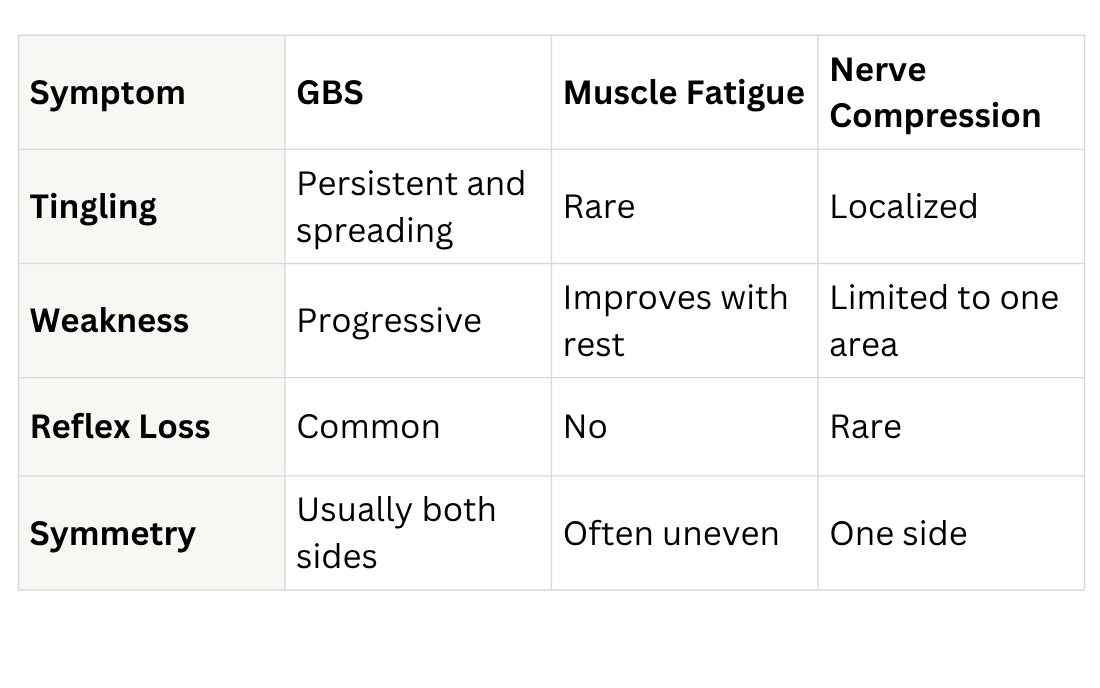
This comparison highlights why GBS should not be ignored when symptoms appear in both sides of the body and worsen over time.
GBS often develops after an infection. This is because the immune system becomes overactive and starts attacking nerves.
The symptoms usually appear days or weeks after the triggering event.
Symptoms of GBS typically begin within 1 to 3 weeks after an infection.
The onset is often sudden but mild at first. Many people do not immediately connect their symptoms to a serious condition.
A person recovers from a flu-like illness. A week later, they notice tingling in their feet. Within days, weakness spreads to their legs.
This progression is a classic early pattern of GBS.
Recognising Guillain-Barré early symptoms can significantly impact treatment success.
✔ Faster medical intervention
✔ Reduced risk of severe paralysis
✔ Better recovery outcomes
✔ Lower risk of complications
Delaying treatment can lead to more serious symptoms, including breathing difficulties.
GBS can affect anyone, but certain factors may increase the risk.
However, it can still occur in healthy individuals without warning.
You should seek medical attention immediately if you notice:
⚠ Rapidly worsening weakness
⚠ Tingling that spreads quickly
⚠ Difficulty walking or standing
⚠ Trouble breathing or swallowing
These signs indicate that the condition may be progressing.
Doctors use several methods to confirm GBS.
Early testing helps confirm the condition and start treatment quickly.
If you suspect early GBS symptoms, it’s important to act quickly.
✔ Track your symptoms daily
✔ Avoid self-diagnosing or delaying care
✔ Seek medical advice immediately
✔ Inform your doctor about recent infections
Early awareness can prevent complications.
Understanding Guillain-Barré early symptoms can help you act quickly and avoid serious complications. While the condition is rare, recognising the warning signs early gives you the best chance for effective treatment and recovery.
If something feels unusual, especially after an illness, it is always better to get checked sooner rather than later.
What are the early warning signs of Guillain-Barré syndrome?
The early warning signs of Guillain-Barré syndrome include tingling sensations, muscle weakness, and difficulty walking that gradually worsen. These symptoms often begin in the legs and spread upward.
When do GBS symptoms start?
GBS symptoms typically start within 1 to 3 weeks after a viral or bacterial infection. The onset is usually mild, with symptoms such as tingling or weakness in the lower limbs. Over a few days, these symptoms can become more noticeable and begin to spread.
What does the start of Guillain-Barré feel like?
The onset of Guillain-Barré often begins with tingling, numbness, or weakness in the hands or feet that slowly spreads. Some people describe it as a “pins and needles” sensation that doesn’t go away. Others notice their legs feel heavy or unstable.
What are the first signs of GBS in adults?
The first signs of GBS in adults usually include leg weakness, tingling in the extremities, and difficulty with balance or walking. These symptoms often appear symmetrically on both sides of the body. Adults may also experience mild pain in the lower back or legs.