A Solitary Confinement
A true story about Guillain-Barre Syndrome by
Robin Sheppard
A true story about Guillain-Barre Syndrome by
Robin Sheppard
August, 2026
A promising development in Guillain-Barré syndrome (GBS) research has been reported following results from a late-stage clinical trial investigating a new treatment for Guillain-Barré syndrome.
According to a recent article published by New Scientist, the investigational treatment showed encouraging results during clinical testing. If approved by regulators, it could become the first targeted treatment developed specifically for Guillain-Barré syndrome.
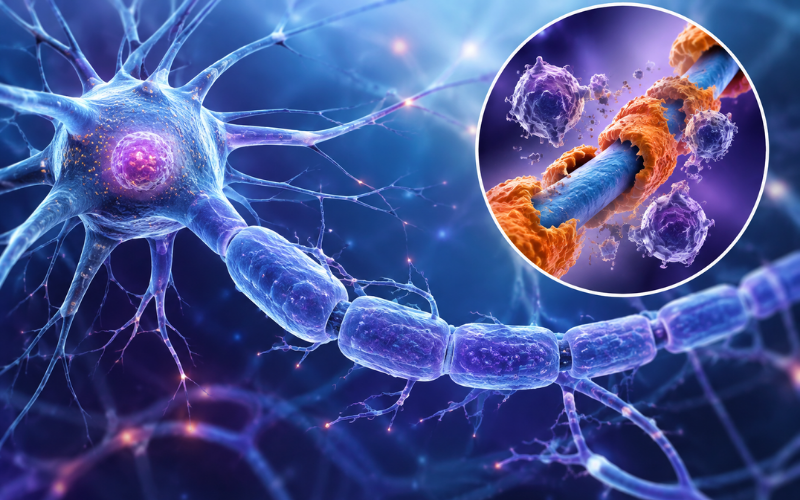
Doug Love, representing the company developing the treatment, said that patients receiving the therapy “got better sooner and more completely on every measure in our studies.” While these findings are encouraging, the treatment has not yet been approved for routine clinical use, and further regulatory review is still required before it becomes available to patients.
For now, established treatments such as intravenous immunoglobulin (IVIg) and plasma exchange remain the standard therapies for Guillain-Barré syndrome.
This is an important development that we will continue to follow, and we’ll provide further updates as more information becomes available.
This is an encouraging development, but the treatment has not yet been approved for routine use. More information and regulatory decisions are still needed before we know what this could mean for people living with Guillain-Barré syndrome.
In the meantime, there is still plenty to learn about living with and recovering from GBS. Our resources cover different areas of recovery and wellbeing, including physiotherapy and rehabilitation for GBS, as well as foods that may support someone with Guillain-Barré syndrome.
We also explore natural approaches to supporting recovery from GBS, with a focus on information and supportive approaches rather than replacing medical treatment.
We will continue to follow this development and share further information as more details about the treatment and its potential approval become available.
Is there a new treatment for Guillain-Barré syndrome?
Research into a potential new treatment for Guillain-Barré syndrome has produced encouraging results in a late-stage clinical trial. However, the treatment has not yet been approved for routine clinical use, and further regulatory review is required.
Has the new Guillain-Barré treatment been approved?
No. The treatment discussed in this research update has not yet been approved for routine use. Further information and regulatory decisions are needed before it can become available to patients.
What treatments are currently used for Guillain-Barré syndrome?
Current treatments for Guillain-Barré syndrome include intravenous immunoglobulin (IVIg) and plasma exchange. These treatments are used to help manage the condition and reduce the effects of the immune system’s attack on the peripheral nerves.
Does the new treatment mean Guillain-Barré syndrome can now be cured?
No. The research does not mean that Guillain-Barré syndrome can now be cured. The treatment is still under investigation, and more information is needed before its potential benefits and role in GBS treatment can be fully understood.
When will the new treatment for Guillain-Barré syndrome be available?
It is not yet known when the treatment will become available. This will depend on the results of the regulatory review and whether the relevant health authorities approve it for use.