A Solitary Confinement
A true story about Guillain-Barre Syndrome by
Robin Sheppard
A true story about Guillain-Barre Syndrome by
Robin Sheppard
May, 2026
Guillain-Barré Syndrome (GBS) is usually triggered by an infection that causes the immune system to mistakenly attack the nerves. Common triggers include respiratory infections, stomach bugs like Campylobacter jejuni, viruses such as flu or COVID-19, and, in rare cases, surgery or vaccinations. While the exact reason this immune reaction happens is still being studied, early recognition of symptoms can make a major difference in recovery.
Key Takeaways
Guillain-Barré Syndrome (GBS) is a rare neurological disorder where the body’s immune system mistakenly attacks the peripheral nervous system. This can lead to muscle weakness, numbness, tingling sensations, and, in severe cases, temporary paralysis.
Most people first notice symptoms starting in the legs before progressing upward. The condition can develop rapidly over hours or days, which is why prompt medical attention is important.
Although GBS is considered rare, many patients ask the same question after diagnosis:
What triggers GBS in the first place?
The answer usually involves an immune response that follows another illness or infection.
For a deeper understanding of the different forms of the condition, read:
4 Types of Guillain-Barré Syndrome: Understanding the Variants and Recovery Journey
The exact cause of Guillain-Barré Syndrome is not fully understood, but researchers believe it happens because the immune system becomes confused after fighting an infection.
Normally, the immune system attacks harmful bacteria or viruses. In GBS, however, immune cells mistakenly target the protective covering of nerves called myelin or sometimes the nerves themselves.
This process interrupts nerve signals between the brain and muscles, leading to weakness and coordination problems.
One leading theory is called molecular mimicry.
Certain viruses or bacteria contain proteins that resemble components of human nerves. After fighting the infection, the immune system accidentally attacks both the infection and healthy nerve tissue.
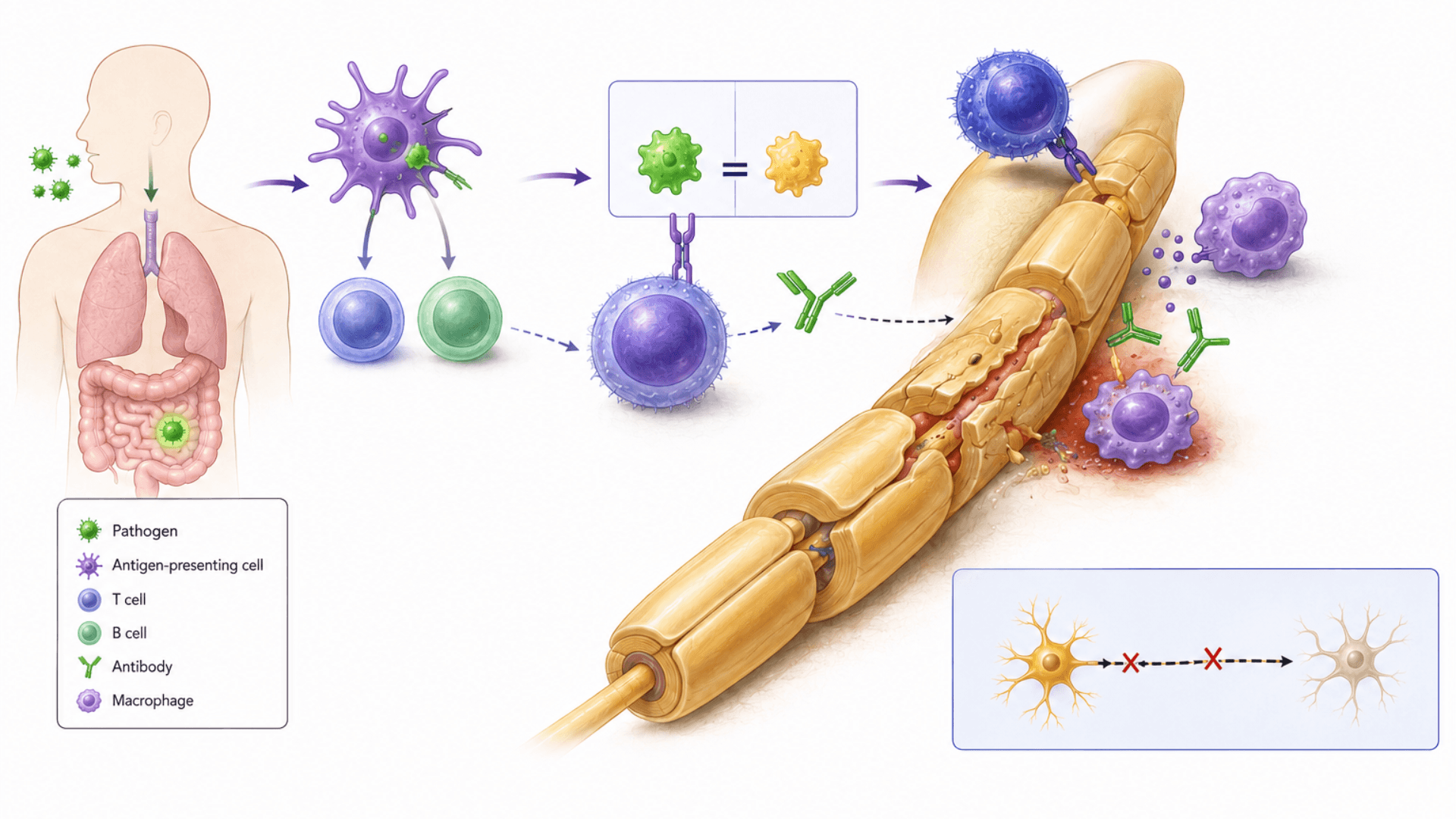
Several infections are strongly associated with Guillain-Barré Syndrome. Symptoms of GBS usually appear within a few days or weeks after the initial illness.
Colds, flu, bronchitis, and other respiratory infections are among the most common triggers.
Many patients report developing weakness shortly after recovering from:
The immune response triggered during these illnesses may continue even after the infection clears.
One of the strongest known triggers is a bacterium called Campylobacter jejuni, often linked to food poisoning.
Symptoms before GBS may include:
This infection is frequently associated with more severe nerve involvement.
Several viruses have been connected to GBS, including:
| Virus | Possible Link to GBS |
|---|---|
| Influenza | Immune system activation |
| COVID-19 | Post-viral inflammatory response |
| Epstein-Barr Virus | Nervous system inflammation |
| Cytomegalovirus | Increased autoimmune activity |
| Zika Virus | Strongly associated during outbreaks |
In some cases, surgery or major physical stress may precede GBS symptoms. Researchers believe stress on the immune system could contribute to triggering abnormal immune activity.
Vaccines are a very rare trigger compared with infections themselves. Most studies show the risk of developing GBS after infections like flu or COVID-19 is significantly higher than after vaccination.
Stress alone is not considered a direct cause of Guillain-Barré Syndrome.
However, prolonged physical or emotional stress may weaken the immune system or increase vulnerability to infections that can act as triggers.
Some patients report experiencing:
before the onset of symptoms, but stress itself is not currently recognised as a primary trigger.
GBS can affect people of all ages, but certain factors may slightly increase risk.
These include:
Importantly, most people who experience common infections never develop GBS.
This suggests additional immune or genetic factors may influence why only certain individuals are affected.
Understanding what triggers GBS is important, but recognising symptoms early may be even more critical.
Common early signs include:
Symptoms often worsen over days or weeks and may require urgent medical care.
If weakness spreads rapidly or breathing becomes difficult, emergency treatment is necessary.
Doctors diagnose Guillain-Barré Syndrome using:
Treatment usually focuses on reducing immune system activity and supporting recovery.
Common treatments include:
Most people gradually recover, although recovery timelines vary widely.
Recovery from GBS can take weeks, months, or even years depending on the severity of nerve damage.
Some people recover fully, while others may experience:
Rehabilitation and long-term support often play a major role in improving quality of life.
For more insight into the different GBS variants and recovery expectations, visit:
4 Types of Guillain-Barré Syndrome: Understanding the Variants and Recovery Journey
Understanding guillain barre causes can help patients recognise symptoms earlier and seek medical attention faster. In most cases, GBS is triggered by an infection that causes the immune system to mistakenly attack the nerves.
Although the condition can feel frightening and unpredictable, many people improve with early treatment, rehabilitation, and ongoing support.
Learning more about the condition, including its different forms and recovery patterns, can make the journey less overwhelming for patients and families alike.
What triggers GBS most often?
The most common triggers are infections, especially respiratory illnesses and gastrointestinal infections like Campylobacter jejuni.
Can COVID-19 trigger Guillain-Barré Syndrome?
Yes. Some cases of GBS have been reported after COVID-19 infection, although the condition remains rare.
Is Guillain-Barré Syndrome contagious?
No. GBS itself is not contagious, although the infections that may trigger it can spread between people.
Can stress cause GBS?
Stress is not considered a direct cause, but it may contribute indirectly by affecting the immune system.
How quickly does GBS develop after infection?
Symptoms often begin within days or weeks after recovering from an infection.