A Solitary Confinement
A true story about Guillain-Barre Syndrome by
Robin Sheppard
August, 2026
Most cases of Guillain-Barré syndrome (GBS) develop after a viral or bacterial infection. While the infection itself does not directly cause nerve damage, it can trigger an abnormal immune response that mistakenly attacks the peripheral nerves. Understanding the most common GBS infection causes can help people recognise potential warning signs and seek medical attention promptly.
Key Takeaways
Many people diagnosed with Guillain-Barré syndrome are surprised to learn that their symptoms began shortly after what seemed like a routine illness. A stomach bug, seasonal flu, or respiratory infection may have resolved, only for weakness and tingling to appear days or weeks later.
Although people often search for GBS infection, it’s important to understand that GBS itself is not an infection. Instead, certain infections can trigger the immune system to mistakenly attack the body’s peripheral nerves. Understanding these GBS infection causes can help explain why the condition develops and why recognising the early symptoms is so important.
If you’re unfamiliar with the condition itself, our guide to Guillain-Barré syndrome explains how it affects the nervous system and what to expect during recovery.
GBS is considered an autoimmune disorder.
Normally, your immune system creates antibodies to fight bacteria and viruses. In rare cases, those antibodies become confused and begin attacking the protective covering of healthy peripheral nerves instead.
This mistaken immune response interrupts communication between the nerves and muscles, leading to symptoms such as:
Symptoms usually begin one to four weeks after an infection, by which time the original illness may have completely disappeared.
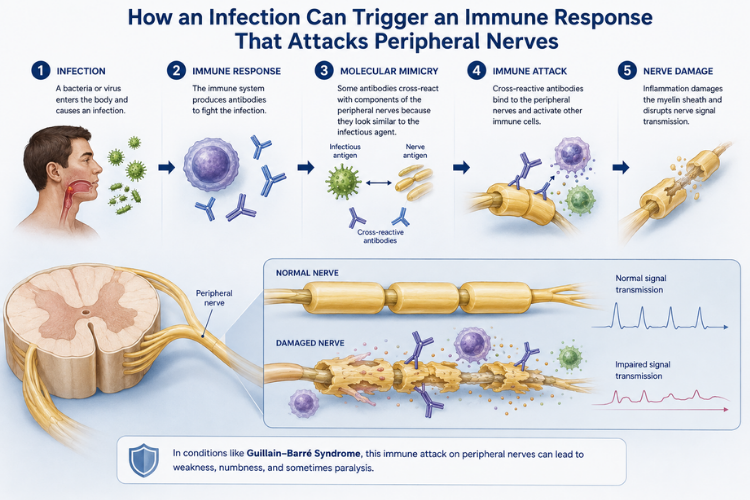
Several infections have been linked to Guillain-Barré syndrome. While they increase the risk, it’s important to remember that GBS remains very rare, even after these illnesses.
One of the most common triggers worldwide is Campylobacter jejuni, a bacterium that causes food poisoning.
People typically develop:
After recovering from the stomach infection, a small number of people go on to develop GBS.
This is why many people search for stomach infection GBS, as gastrointestinal illness is one of the best-known triggers.
A respiratory infection is another recognised trigger. Although uncommon, the immune response following influenza can sometimes lead to Guillain-Barré syndrome.
People searching for flu trigger GBS are usually referring to this delayed immune reaction rather than the flu virus directly attacking the nerves. It’s worth noting that the risk of developing GBS after influenza infection is generally considered to be higher than after influenza vaccination.
Researchers have also identified cases of GBS following infections such as:
These viruses are believed to trigger an abnormal immune response in susceptible individuals rather than directly damaging the nervous system.
Many people report having a cough, cold, sore throat, or chest infection before developing GBS. While the exact virus isn’t always identified, respiratory infections are commonly reported in the weeks leading up to diagnosis.
Although less common, several bacterial infections have also been associated with Guillain-Barré syndrome. Doctors consider a patient’s recent medical history when investigating possible GBS infection causes, especially if neurological symptoms develop shortly after an illness.
This is one of the most important facts to understand.
Millions of people experience flu, stomach bugs, and respiratory infections every year. Only a very small percentage develop Guillain-Barré syndrome. Researchers believe that genetics, immune system differences, and other biological factors likely influence why some people develop GBS while most do not.
If weakness or tingling develops after recovering from an infection, it should never be ignored.
Seek urgent medical attention if symptoms include:
Learning to recognise these warning signs early can make a significant difference. Read our guide on early symptoms of Guillain-Barré syndrome to understand what to watch for.
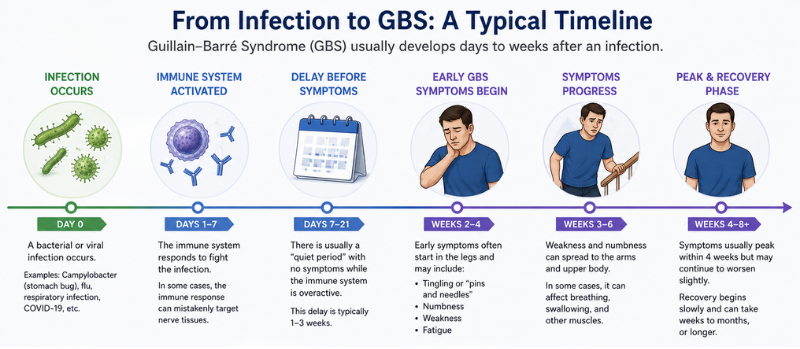
Because the exact immune response isn’t fully understood, there is currently no guaranteed way to prevent Guillain-Barré syndrome.
However, reducing your risk of common infections through good hygiene, proper food preparation, and staying up to date with recommended vaccinations may help lower your overall risk of infections that have been associated with GBS.
Fortunately, even when GBS develops, early diagnosis and treatment can significantly improve recovery outcomes.
Although people often search for GBS infection, Guillain-Barré syndrome is actually an autoimmune condition that can develop after certain viral or bacterial illnesses. Understanding the most common GBS infection causes, including flu, stomach infections, and respiratory viruses, can help you recognise the connection between a recent illness and new neurological symptoms.
If you or someone you know develops weakness, tingling, or difficulty walking after recovering from an infection, seek immediate medical attention. Early diagnosis and treatment can play an important role in improving recovery.
What infections can trigger GBS?
Several infections have been linked to Guillain-Barré syndrome, including Campylobacter food poisoning, influenza, COVID-19, Epstein-Barr virus, cytomegalovirus, and Zika virus. Most people recover from the infection before GBS symptoms begin.
Can GBS infections be cured?
GBS is not an infection, so there is no cure for a “GBS infection.” The infections that may trigger GBS are often treatable or resolve naturally. Treatment for Guillain-Barré syndrome focuses on stopping the immune attack, managing symptoms, and supporting recovery.
Is Guillain-Barré syndrome contagious?
No. Guillain-Barré syndrome cannot be passed from one person to another. While some infections associated with GBS may be contagious, the syndrome itself is not.
How long after an infection can GBS develop?
Symptoms typically appear one to four weeks after a viral or bacterial infection, although the exact timing varies between individuals.
Does everyone who gets the flu or food poisoning develop GBS?
No. Guillain-Barré syndrome is very rare. The vast majority of people recover from common infections without developing neurological complications.
What are the first signs of GBS after an infection?
Early symptoms often include tingling in the feet or hands, muscle weakness that starts in the legs, difficulty walking, and reduced reflexes. These symptoms usually worsen over several days or weeks and require urgent medical assessment.